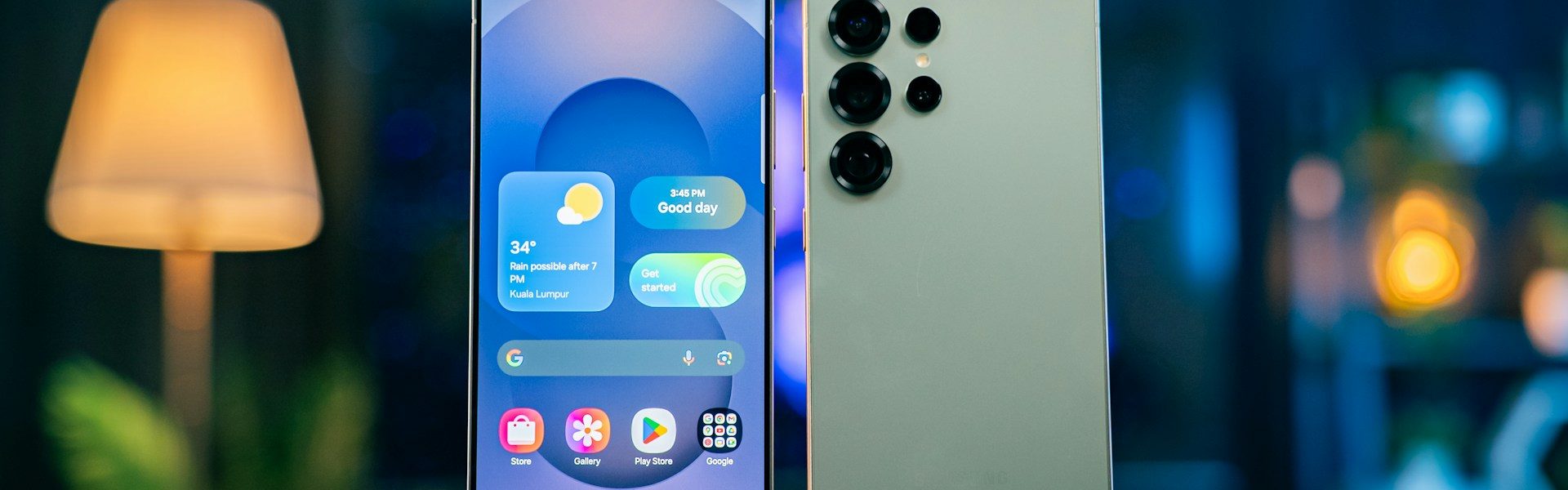

New information regarding Samsung’s upcoming flagship series suggests a clear divergence in strategy for the Galaxy S26 lineup. While the hardware specifications appear to follow an evolutionary rather than revolutionary path, significant software undercurrents indicate that the Galaxy S26 Ultra may finally bridge the gap between a smartphone and a portable development rig.
According to recently analysed log files and leaked data sheets, the focus for the upcoming generation rests heavily on software capability and Artificial Intelligence, specifically within the new One UI 8.5 environment.
Unleashing the Linux Terminal
Perhaps the most intriguing development for power users concerns a feature that was notably absent from the Galaxy S25 Ultra. When Google introduced the Linux Terminal feature last year—a tool allowing Android devices to run a full Linux environment—it felt like a watershed moment for mobile computing. However, Samsung’s previous flagships were left on the sidelines. Despite possessing adequate hardware, the S25 Ultra lacked the necessary system-level support.
It appears Samsung is rectifying this oversight. Log files obtained from a pre-release Galaxy S26 Ultra indicate that the device explicitly declares support for the Android Virtualization Framework (AVF). This framework is the prerequisite for Google’s Linux Terminal, enabling the device to handle tasks previously reserved for laptops, such as running proper development tools, scripting utilities, and Linux-based applications.
If this feature survives the final software polish for the launch of One UI 8.5 (reportedly based on Android 16’s second quarterly release), it would fundamentally transform the utility of the S26 Ultra for developers and enthusiasts. While these details are derived from pre-release logs and subject to change, the mere presence of AVF support suggests Samsung is finally ready to let its hardware stretch its legs.
Processing Power: A Tale of Two Chips
Under the bonnet, the division of labour between processors continues, though the gap is narrowing. In European markets, the standard Galaxy S26 and S26+ are set to utilise Samsung’s own Exynos 2600. This high-end SoC is manufactured using a cutting-edge two-nanometre process and features a deca-core architecture. Performance metrics suggest the Exynos 2600 has nearly caught up to its rival, offering speeds comparable to the Qualcomm silicon found in the top-tier model.
The Galaxy S26 Ultra, meanwhile, will reportedly utilise the Qualcomm Snapdragon 8 Elite Gen 5. This chip is a beast in its own right, clocking in at up to 4.74 GHz—slightly higher than the standard variants of the same chip used by competitors.
Memory and Storage Overhaul
Samsung appears to be streamlining its memory configurations, effectively raising the floor for entry-level specs. The 128GB storage option has been scrapped entirely for the base models. Consequently, all versions of the Galaxy S26 series will start with either 256GB or 512GB of internal flash storage.
In terms of RAM, 12GB is now the standard across the board. However, for those eyeing the absolute peak of the range, the Galaxy S26 Ultra with 1TB of storage will come equipped with a massive 16GB of RAM, likely to support the more intensive on-device AI tasks Samsung is prioritising.
Displays and Durability
Visually, the new devices will feel familiar. The screen sizes remain unchanged at 6.3, 6.7, and 6.9 inches respectively. Samsung is deploying its new Dynamic AMOLED 2X panels protected by Corning Gorilla Glass Armor 2, with variable refresh rates ranging from 1Hz to 120Hz.
Resolution-wise, the standard S26 offers a “Full HD+” experience (2340×1080 pixels), whilst the S26+ and S26 Ultra step up to a crisp 3K level resolution of 3120×1440 pixels.
A Static Camera Setup?
For photography enthusiasts hoping for a major hardware overhaul on the standard models, the news is somewhat tempered. The camera arrays on the S26 and S26+ rely on proven, if slightly stagnant, hardware. The main shooter is a 50-megapixel sensor (1/1.56″ format) with an f/1.8 aperture, optical image stabilisation (OIS), and a 24mm equivalent focal length.
The telephoto duties are handled by a 10-megapixel sensor offering 3x optical zoom (67mm equivalent) with an f/2.4 aperture. The ultra-wide camera utilises a 12-megapixel sensor. Keen-eyed observers might note that Samsung appears to have reduced the maximum aperture size on the auxiliary cameras compared to previous iterations, with the ultra-wide now sitting at f/2.55 and lacking autofocus or OIS.